

The Body Keeps the Score: Transforming Your Relationship with Fear
Every summer, a client of mine who was a college professor, prepared the same way for her annual trip to Europe with her students. She would sit down and imagine every conceivable disaster: someone getting sick, someone losing their passport, someone breaking a bone, someone having a reaction to unfamiliar food. Then she would pack for all of it.
By the time she was done, her suitcase weighed nearly fifty pounds. Bandages. Ice packs. Hydrocortisone creams. A thermometer. Ibuprofen and acetaminophen in quantities that could stock a small pharmacy. She hauled this suitcase down the stairs of her New York City walk up, on transatlantic flights, through cobblestone streets and up narrow staircases, sweating through train stations and standing in long customs lines. It exhausted her.
On the flight home one summer, a student began showing signs of an allergic reaction to a bed bug bite. The student was fine, attended to quickly, recovered completely, though terrifying in the moment.
Do you know what my client had not packed for? That exact situation. She had tried, but she couldn't have known. The thing that actually happened was never on her list.
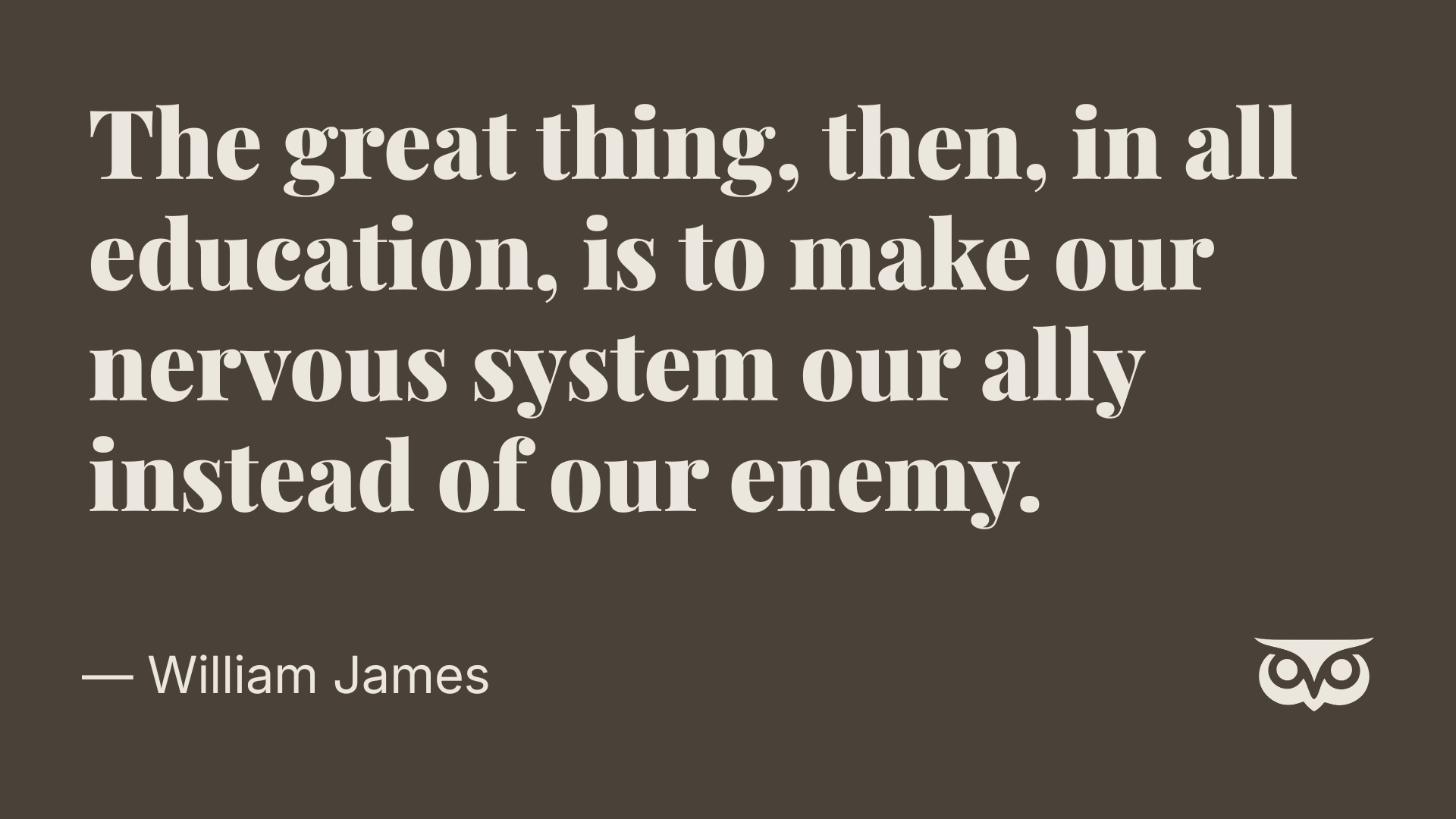
This is what hypervigilance costs us: enormous effort, constant depletion, and the painful irony that even after carrying everything, we still cannot fully prepare for how life actually unfolds. The suitcase weighs us down without protecting us. It gives us the feeling of control while delivering very little of the substance. Hypervigilance is fear wearing preparedness as a disguise.
For many of us, that suitcase isn't something we pack once a year. We carry it every day, in our bodies, our nervous systems, our quietly braced-for-impact way of moving through the world.
What Living in a Threat State Does to Your Body
The human stress response is a marvel of evolutionary engineering. When the brain perceives danger, the hypothalamic-pituitary-adrenal (HPA) axis activates, flooding the body with cortisol and adrenaline. Heart rate climbs. Blood is rerouted from your digestive organs to your muscles. Your immune system ramps up for potential injury. You are, in that moment, supremely capable of surviving a threat.
The system was designed for acute threats like a predator, a fall, an attack. It struggles when forced to run continuously.
When the threat response becomes chronic, the body pays a steep price:
Inflammation and immune dysregulation. Cortisol, which initially suppresses inflammation, becomes pro-inflammatory in the context of chronic stress. Research has linked sustained threat states to elevated levels of inflammatory markers like IL-6 and CRP, which are implicated in conditions ranging from cardiovascular disease to autoimmune disorders to depression.
Nervous system dysregulation. Prolonged activation of the sympathetic nervous system, our "gas pedal," can impair the body's ability to return to parasympathetic rest. The vagal tone that governs our capacity for calm, connection, and recovery becomes compromised. Sleep suffers. Digestion suffers. The capacity for genuine social engagement, what Stephen Porges calls the "social engagement system," narrows.
Predictive processing errors. The brain is a prediction machine. It continuously generates models of what is likely to happen next, drawing on past experience to make sense of incoming signals. When those past experiences have included chronic threat, the brain learns to weight threat cues heavily, and to fill in ambiguous gaps with danger. We see menace in neutral faces. We interpret a colleague's silence as hostility. We feel physical pain in the absence of tissue damage, because the nervous system has learned that the world is dangerous.
Structural brain changes. Chronic stress has been associated with shrinkage of the prefrontal cortex, the seat of executive function, nuanced judgment, and emotional regulation, and hyperactivation of the amygdala, our threat-detection center. The very brain region we need to calm ourselves down becomes less available, right as the alarm system grows louder.
This is adaptation at work. The brain that kept you vigilant in an unsafe environment did its job. The question is whether that same strategy is serving you now.
Chronic Pain, Overcontrol, and the Threat-Prone Brain
If you have ever lived with chronic pain, you may have noticed that it rarely behaves the way we expect pain to behave. It waxes and wanes without clear correlation to activity or rest. It moves. It spikes in response to stress, to conflict, or to uncertainty. The pattern is neurological.
Pain researcher Alan Gordon and others working in the Pain Reprocessing Therapy tradition have demonstrated that a significant subset of chronic pain is generated by a brain in a sustained threat state, a brain that has learned to interpret safe signals as dangerous ones. The pain is real, even when tissue damage is absent.
The same pattern appears in what RO-DBT researchers call overcontrolled presentations: individuals with high threat sensitivity, strong inhibitory control, and a deeply held sense that the world demands extreme caution. Overcontrolled individuals often appear highly competent and put-together from the outside, while internally carrying a vigilance that never fully rests. The amygdala is always slightly on. The emotional thermostat is always running warm.
What connects chronic pain and overcontrol is a shared underlying state: a nervous system with a low threat threshold, and a predictive brain that has learned to find danger in ambiguity. In both cases, the brain is trying to protect. In both cases, the protection has become its own burden.
The good news is that the brain is plastic. The nervous system can learn new patterns. And you can begin shifting the dial today, in your own body.
Three Things You Can Do Right Now
These practices work alongside deeper therapeutic work. They are grounded in neuroscience, accessible in ordinary moments, and capable of gently interrupting a threat state long enough for something new to become possible.
1. Offer Yourself Comforting Touch
Place one hand on your heart, or wrap your arms around yourself in a gentle self-hug. Take a slow breath.
Here is something remarkable: research on self-compassion and the neuroscience of touch has found that the brain responds similarly to comforting touch offered by another person and comforting touch we offer ourselves. The receptors activated, the oxytocin released, the parasympathetic shift happen regardless of the source of the contact.
This matters enormously for those of us who live alone, who are far from safe people, or who find it hard to receive comfort from others. You have, in your own hands, the capacity to signal safety to your nervous system. It may feel awkward at first. Do it anyway. The body responds whether the gesture feels natural or not.
2. A Moment of Somatic Tracking
This one asks something of you that threat states make difficult: curiosity.
Take a moment and simply notice what is happening in your body right now. Set aside the urge to fix it, analyze it, or decide whether it means something bad. Just notice.
Is there tension somewhere? Warmth or coolness? A heaviness or a lightness? Where are you holding your breath? What does the ground feel like beneath your feet?
This practice, sometimes called somatic tracking or safety reappraisal, works by gently interrupting the brain's automatic threat-labeling of body sensations. When we bring curious, non-judgmental awareness to what is happening in our bodies, we begin to train the brain to experience those sensations as information rather than alarm. Over time, this loosens the grip of the predictive threat model. The body becomes less frightening. And a less frightening body is a quieter nervous system.
3. An Orienting Practice: 5-4-3-2-1
When the nervous system is activated, one of the most effective things we can do is return attention to the present environment, to the actual room you are in, right now, which in most cases contains no imminent threat whatsoever.
Try this:
5 things you can see, look around slowly, naming each one
4 things you can physically feel, the chair beneath you, the air on your skin, your feet on the floor
3 things you can hear, let sounds come to you rather than reaching for them
2 things you can smell (or notice the absence of smell)
1 thing you can taste
This exercise works because it engages the sensory present moment, which the brain's threat-anticipation mode struggles to maintain. Hypervigilance is future-oriented. It is always scanning for what might happen. Orienting brings us back to the present. When we are truly here, in this room, with these senses, we step out of the anticipated danger for a moment.
A moment is enough. Moments accumulate.
From Hypervigilance to Resilience
Resilience has very little to do with the absence of fear, with refusing to prepare, with pretending that hard things don't happen, or with breezy confidence that everything will work out fine.
Resilience is the sense of knowing we have the ability to handle life as it unfolds rather than spending our precious energy trying to anticipate and prepare for worst case scenarios. It is the ability to put down the heavy suitcase long enough to rest, to breathe, to be present to what is actually here rather than everything that might be.
The professor with the enormous suitcase cared deeply about her students. She had come to believe that her suffering, her exhaustion, her hypervigilance, her inability to enjoy the trip, was the price of that care. It was just fear, doing what fear does: convincing us that the weight is what keeps us safe.
You are allowed to set it down.
Why does my body feel like it's always on alert, even when nothing is wrong?
What is hypervigilance?
How does chronic stress affect the body physically?
What is the connection between chronic pain and overcontrol?
What is somatic tracking, and how does it help?
Can you really change a hypervigilant nervous system?
Beyond the insight.
Knowledge is the first step; integration is the work. If you're ready to move these concepts into your actual life, let's talk about a strategic path forward.
Book a Consultation