5 Ways to Reset a Nervous System That’s Stuck in the Stone Age
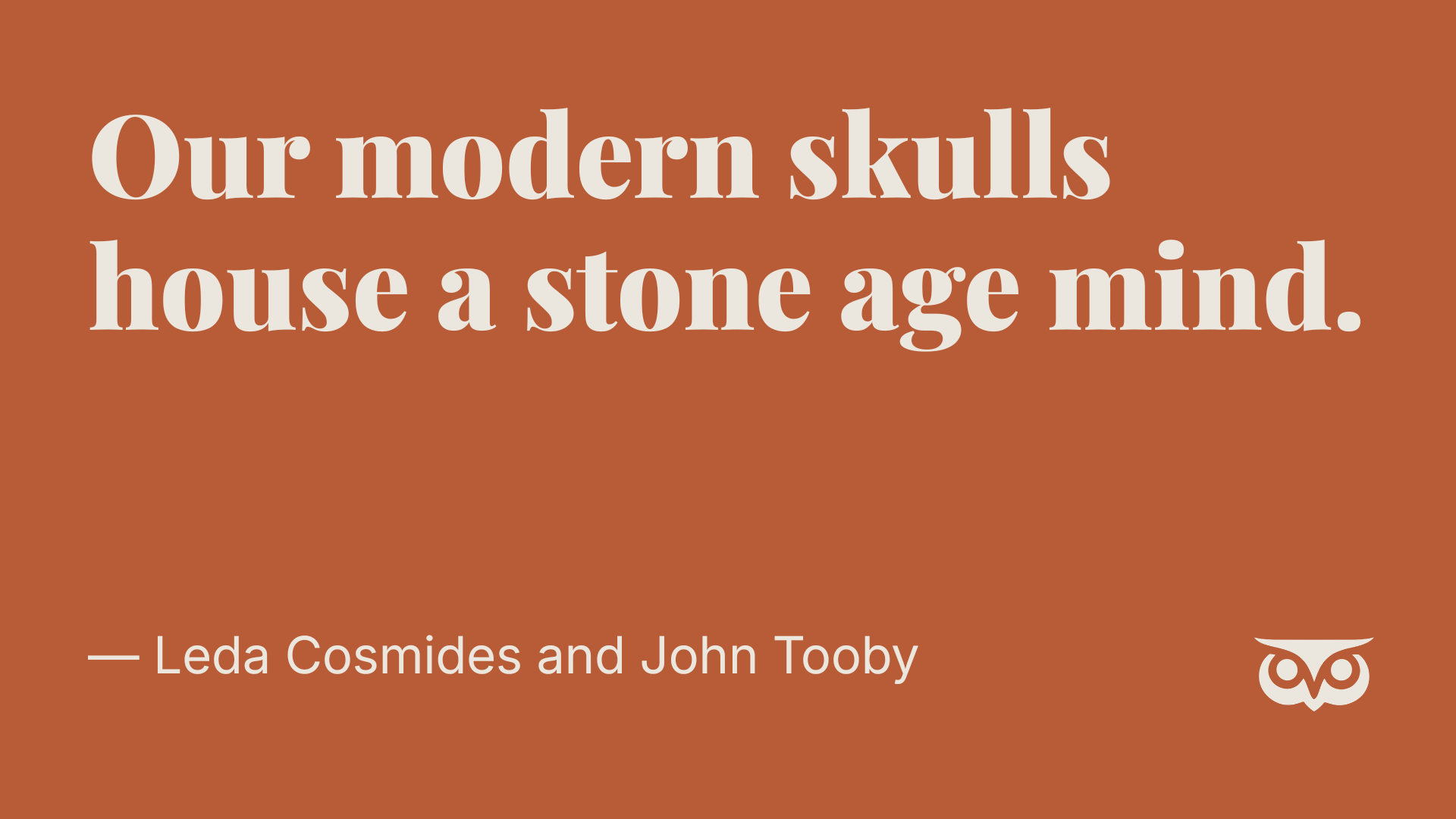
Harsh truth: Your nervous system was built for a world that no longer exists.
For nearly all of human history, your body learned what safety felt like from the world around it. It read the light, the open space, the rhythm of the day, and the presence of people who knew your name, and it used those signals to decide whether you could rest or needed to brace. Your threat-detection system calibrated itself to that world over hundreds of thousands of years, and it has not meaningfully changed since.
But the world has.
In an evolutionary hot minute, the environment changed completely. We swapped sunrise for screens, walking for sitting, the tribe for the friend group chat, and silence for an infinite feed of 14 second videos. Your Stone Age nervous system is running in a world that is unrecognizable.
This has material consequences. Your body is constantly scanning for signs of safety or danger, mostly below the level of conscious thought. When the old signals of safety go missing, the system does not assume everything is fine. Its primary job is to keep you alive, so when it stays switched on, it defaults to danger.
The Price of a Constant Threat Response
That always-on state is the problem. The stress response was designed to fire hard and then shut off, a sprint followed by recovery. Modern life keeps the gas pedal pressed down. Researchers describe chronic stress as an engine that idles too high for too long, with the body staying revved up and on alert while the brake never fully engages. The system designed to protect you starts wearing you down instead.
Here's why it's worth paying attention to: when your nervous system stays in threat mode, it gets worse at telling real danger from false alarms. A calm afternoon starts to feel like the quiet before something bad. An unanswered text reads as rejection. A normal sensation of hunger turns to hangry meltdown. You begin to misread safe signals as dangerous ones, and each misread keeps the alarm running a little longer.
And when we look at how these biological systems evolved, we cannot really tease apart the body from the mind. The same pathway that drives anxious thoughts also raises your heart rate, tightens your gut, disrupts your sleep, and quietly turns up inflammation. The mental and the physical are wired into the same circuit. When one stays on alert, so does the other. That is why a stuck threat state shows up as both a racing mind and an exhausted body. After years, even decades, of living in this mode, the wear starts to show up as real conditions: high blood pressure and heart disease, blood sugar problems, a worn-down immune system that turns on the body, chronic pain, anxiety, and depression. The threat response was meant to save your life in a moment. Run it for thirty years and it slowly costs you one.
Five Ways to Tell Your Mind and Body It's Safe
1. Get into nature, and do it on purpose.
The environment shift: We moved indoors. The average person now spends the overwhelming majority of their life under a roof, surrounded by right angles, artificial light, and processed air.
What it does: Enclosed, man-made spaces give your threat system almost nothing it recognizes as safe. Green, open, living environments do the opposite. They are the original signal of a place that can sustain you.
The counter: Spend at least ten minutes in a natural setting, with no phone and no agenda. Research on outdoor exposure found that as little as ten minutes lowered the stress hormone cortisol by around twenty percent, with stronger effects between twenty and thirty minutes. A park bench counts. The point is contact, not distance. For a deeper and longer lasting experience, try a camping trip. Even better with people you love. Two nights of sitting around a campfire and sleeping under the stars, out of cell range, has reset my nervous system more deeply than I expected.
2. Be with your people, in person.
The environment shift: We traded the tribe for the network. Most of our connection now happens through a screen, and many high-functioning people are surrounded by colleagues yet genuinely known by almost no one.
What it does: For most of human history, isolation meant death. Your nervous system still treats being alone and unseen as a threat to survival, which is why loneliness registers in the body, not just the mood.
The counter: Have one unhurried, in-person conversation this week with someone who knows you. Not a meeting. Not a transaction. Sitting across from a trusted person and feeling understood is one of the fastest ways the body has to register that you are safe. Of course, Zoom calls are not what we evolved for, but they beat nothing if you cannot meet in person.
3. Move your body the way it was built to move.
The environment shift: We sit. Work, travel, and rest now all happen in a chair, and the daily walking that was once the baseline of human life has nearly vanished.
What it does: A still body sends a confusing signal to a system that expects motion. Movement is also how the body completes and discharges a stress response, so without it the activation has nowhere to go.
The counter: Take a brisk walk, ideally outside, even for fifteen minutes. This will give a keyed-up nervous system the physical outlet it was waiting for. If you can turn that into play, it's even better. Throwing a frisbee around with a friend and pairing it with a good laugh will reset your entire day. This is different than a structured exercise routine, which absolutely has its place, but our goal is to make it casual, relaxed, and lacking in intensity.
4. Respect the rhythm of light and dark.
The environment shift: We abolished darkness. Bright light is now available at every hour, and most of us take it in through a glowing screen well past sunset.
What it does: Your body sets its internal clock by light. Late-night brightness tells the brain it is still daytime, which delays the wind-down the body needs and keeps the system on a low simmer through the night.
The counter: Get bright, natural light in your eyes within an hour of waking, and dim the lights and screens in the last hour before bed. If this tip sounds overused, there's a good reason for it: this is the oldest signal your body has for when to be alert and when to stand down. It's hardwired in your eyes, brain, and endocrine system. Our family once spent three weeks using only candlelight after sunset, and our nervous systems settled so deeply that staying awake past eight became almost impossible.
5. Build in real silence and real rest.
The environment shift: We filled every gap. There is always a screen, a feed, a podcast, a notification. The empty, uneventful stretches that used to make up much of human life are gone.
What it does: Constant input keeps the brain in a mild state of vigilance, always processing, always anticipating the next ping. The system never gets the message that it is allowed to power down.
The counter: Take ten minutes a day with no input at all. No phone, no music, no task. Just sit, or stare out a window, and let your attention go quiet. Expect it to be uncomfortable, but take solace in the fact that you are simply re-educating your nervous system on being allowed to rest. We're not going to call this a meditation, but if you're desperately grasping for something to do for those ten minutes, try and just passively pick one thing to notice. The leaves blowing in the wind. The clouds passing overhead. The thoughts drifting through your mind. The breath filling your belly. And by passive, I mean don't watch it like a hawk, just notice it without trying to change it or bring any intensity to it.
Coming Home to Your Biology
So if you cannot go live off the grid in a commune or become an Amish farmer, (I have genuinely considered both), you can at least give your nervous system the signals it evolved to read as safe. No 35-degree cold plunges or crazy fasting required (Yup, I have tried those too). These are simply the inputs your biology has been quietly waiting for. None of it asks you to give up the life you have built, or diminishes your ability to live in this modern world. It only asks you to hand your body, now and then, the few simple signals it has always understood.
Your biology is homesick. Send it home.
Why do I feel anxious and on edge all the time for no reason?
What does it mean to be stuck in a threat response?
Can chronic stress actually cause physical health problems?
Why does being alone make me feel so unsettled?
How does time in nature reduce stress?
What is the fastest way to calm my nervous system?
Beyond the insight.
Knowledge is the first step; integration is the work. If you're ready to move these concepts into your actual life, let's talk about a strategic path forward.
Book a Consultation