

Why “Not That Bad” Is Sometimes the Hardest Place to Be Stuck: The Region-Beta Paradox
I remember the exact moment I knew.
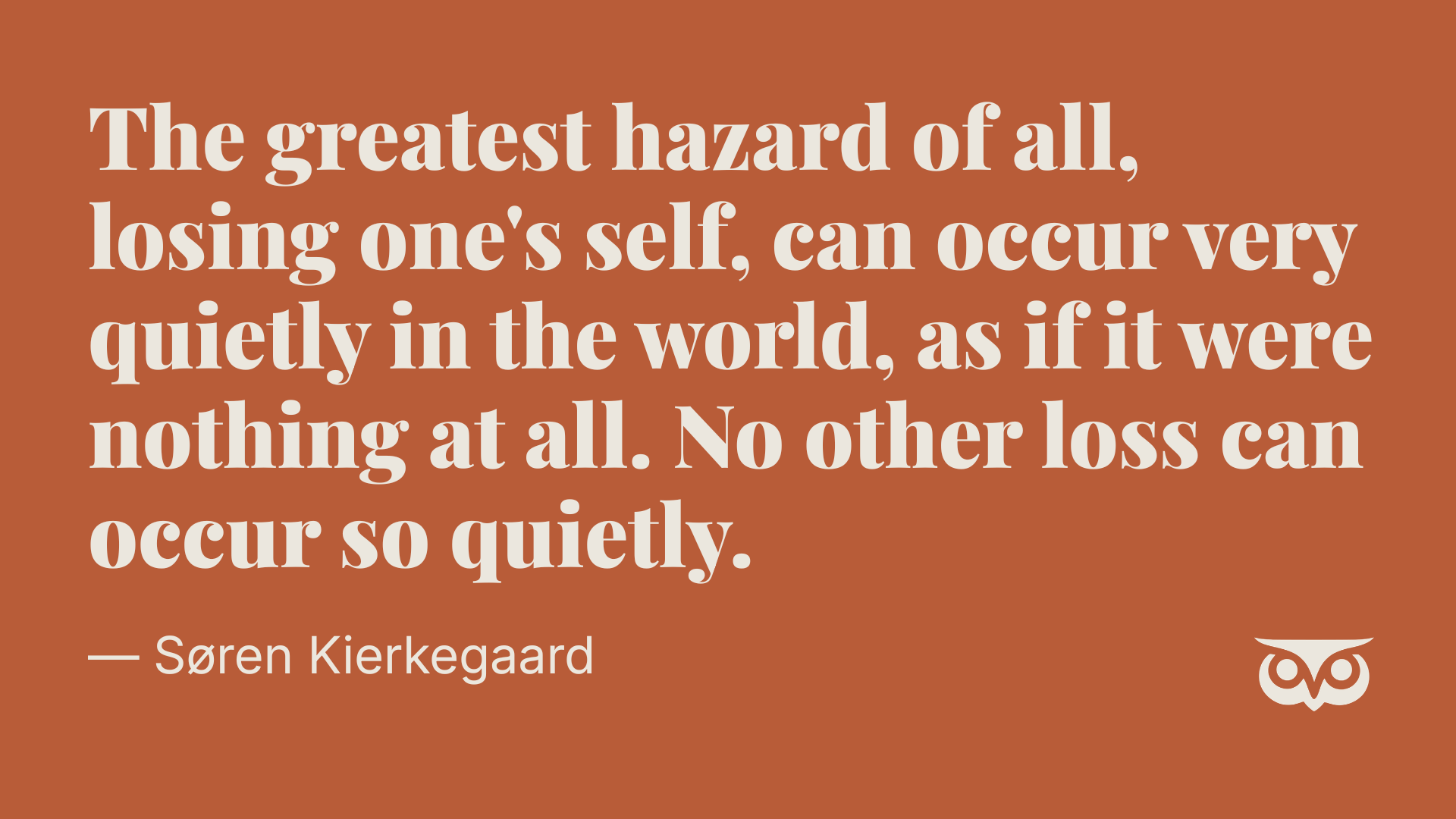
It was my first day as a summer associate at a large law firm, the kind of job that was supposed to confirm that all the years of hard work and sacrifice had been worth it. I was sitting at my new desk checking citations on a legal memo, making sure every footnote pointed to the right case and that every citation format conformed to the correct standard. The work was meticulous and completely beside the point. I had gone to law school because I wanted to address injustice in the world. What I was doing had nothing to do with that. And somewhere in the middle of that memo, I had a sinking, clarifying feeling that this gap, between what had driven me there and what I was actually doing, was not a temporary mismatch. It was the job.
I went back to law school that fall anyway. I finished my degree, passed the bar, and practiced law for six more years.
Not because I didn’t know. I knew from day one. But knowing something and having a reason to act on it are different things, and for years I never quite had the latter. The discomfort was real, but it was also livable, a low hum rather than an alarm. So I did what high-achieving, overcontrolled people do exceptionally well: I moved the goalposts. Once I hit this savings number, I’ll leave. It would be silly to go right before the end-of-year bonus. It would be foolish to leave without the next thing already lined up, which is nearly impossible to figure out when you’re billing seventy hours a week. Every threshold I set, I met and then replaced with a new one. The misery was never quite bad enough to justify blowing up a life that looked, from the outside, like success.
Then, sixteen years ago this week, after an especially brutal stretch on a demanding case, I was called into the managing partner’s office. I thought it was going to be a thank-you. It wasn’t. I got fired.
That imposed threshold, the one I hadn’t been able to set for myself, turned out to be one of the best things that ever happened to me. Someone else’s decision forced me across a line I’d been edging toward for years and never crossing. I went on to build a career I actually wanted. And I think about that often now, sitting with clients who are living in their own version of not quite bad enough, because I know exactly how long that can last, and I also know that you don’t have to wait to get fired.
What I didn’t have a name for then, I do now. Psychologists call it the region-beta paradox, and once you understand what it is and how it works, you’ll see it everywhere.
What Is the Region-Beta Paradox?
The term comes from a 2004 paper by Daniel Gilbert and colleagues, who illustrated it with a commuting puzzle. Imagine you walk to nearby destinations and bike to far-away ones, because biking is faster but feels like more of an effort: get the bike out of the garage, find the lock, find the helmet. Somewhere on the map there’s a stretch just past your walking threshold, a zone they called “region beta,” where you’d actually arrive sooner if you grabbed the bike. But because the discomfort of walking that distance hasn’t crossed your threshold for action, you walk anyway, and arrive later than you would have if the trip had been a little more uncomfortable.
Translated out of the commuting metaphor, the paradox says this: we tend to act decisively when a situation becomes intensely bad, because intensity triggers real coping responses. We problem-solve, we seek help, we mobilize. But when a situation is only moderately bad, it doesn’t cross that activation threshold. We adapt to it instead. We tell ourselves it’s fine. And because we never mobilize, we can stay stuck in the moderately bad thing for years, often longer than someone whose situation was the more dramatic, more obviously broken version of the same problem.
Where This Shows Up in Real Life
The job that’s draining but not quite toxic enough to justify leaving, no single incident you could point to, just a slow chipping away you’ve gotten used to narrating as “fine, honestly.”
The ongoing low-grade loneliness of a marriage where you’re coexisting rather than connecting.
A relationship with alcohol or food that is fraught, but not anything dramatic enough for anyone outside of you to notice.
A body symptom that’s a nagging 3 out of 10 rather than a 9: easy to push through, easy to minimize, and so easy to never actually address.
A friendship or family tie that consistently costs you more than it gives, but not so much that ending it feels justifiable.
Anxiety that’s managed enough to function, never escalates into a crisis that would prompt treatment, just quietly narrows your world.
The self-critic that’s so constant and relentless it doesn’t register as a problem anymore. It’s just your inner monologue, the narrator you’ve stopped questioning.
Perfectionism that produces results, so it never looks like the problem it actually is. The coping works well enough that the driver never has to be examined.
Notice the shape they share: nothing has gone wrong enough to count as a real problem, so the part of you that would otherwise act stays asleep.
Why Coping Can Be the Problem
Here’s the part that Gilbert and Wilson’s research points to but that rarely makes it into the popular writing on this topic: the reason region beta is so hard to escape isn’t just that the situation isn’t bad enough. It’s that your brain is actively working to make sure it stays that way.
Gilbert and Wilson described something they called the psychological immune system, the brain’s largely unconscious set of processes that help us adapt to difficulty. Rationalizing. Reframing. Finding the silver lining. Quietly downgrading our desire for things we can’t have. This is a real, adaptive system, and under the right circumstances it’s genuinely brilliant. It’s what lets people survive grief, recover from failure, and find meaning in hardship. It is, in many ways, one of the most remarkable things about human psychology.
The problem they identified, which they called immune neglect, is that most people don’t know this system exists. And because we don’t account for it, we systematically overestimate how bad difficult things will feel, and for how long. We brace for devastation that our own brain will quietly metabolize faster than we expect.
But there’s a shadow side to this that almost no one writes about: the same system that helps you survive genuinely hard things will also help you survive things you were never supposed to just survive. It doesn’t distinguish between “this is a loss I need to grieve and integrate” and “this is a situation I should actually change.” It just keeps you functional. It keeps you going. And in doing so, it can rob a moderate problem of the very urgency it needs to get addressed.
The rationalizations sound like wisdom. The minimizing sounds like perspective. The goalpost-moving sounds like pragmatism. I know, because I lived it for six years, in a career that was never right for me, while my own psychological immune system quietly convinced me that this was just what adult life felt like.
The Overcontrolled and Neuroplastic Pain Connection
For people with an overcontrolled (OC) temperament, the conscientious, high-achieving, keep-it-together types I work with most, this dynamic is especially insidious. OC people tend to have extraordinarily well-developed psychological immune systems. They are practiced, often from a very young age, at absorbing costs without registering them, at keeping their inner experience from disrupting their outer performance. Which means their coping is so effective, so automatic, and so invisible that even they don’t see it happening.
OC coping is, almost by definition, a system built to keep distress in region beta. Masking, minimizing, pushing through, telling yourself and everyone else that you’re managing: these are exactly the moves that prevent a signal from ever crossing the threshold that would mobilize real change, or real support from other people. The nervous system never gets the unambiguous “this is bad enough to act on” signal, because the whole strategy is to make sure it never looks that bad.
The same logic shows up in neuroplastic pain. A learned pain signal that sits at a tolerable, livable level, the kind you work around rather than treat, can persist for years precisely because it never gets bad enough to force the issue, while an acute injury that’s genuinely severe often triggers faster, more decisive intervention and, ironically, faster resolution. The brain’s threat-detection system keeps reinforcing a pattern that’s irritating enough to shape your life but never quite alarming enough to interrupt it.
How to Break Out of Region Beta
What you actually need to do, before you can even begin to act on a region-beta situation, is make the invisible coping visible. Not to catastrophize. Not to manufacture suffering. But to honestly audit what it is costing you to stay functional in a situation that isn’t working. The sleep that’s a little thin. The social withdrawal that’s happened so gradually you barely noticed. The things you’ve quietly stopped trying for. The emotional floor that has dropped, one barely-perceptible increment at a time, until you’re standing somewhere you never would have agreed to stand.
That audit is what your psychological immune system doesn’t want you to do, because the whole point of the system is to keep you from having to feel the full weight of what you’re carrying. But feeling that weight, clearly and honestly, is often the only thing that finally moves a tolerable problem across the threshold into one you’re ready to do something about. From there:
Name the trap out loud. Ask: “Is this actually fine, or have I just stopped registering it as a problem because it’s gone on so long?” Region beta survives on autopilot; naming it interrupts the autopilot.
Borrow distress on purpose. You don’t need to wait for a crisis to manufacture urgency. Set yourself an artificial deadline, tell someone the real, unedited version of how you’re doing, or imagine explaining this situation to a friend exactly as it is, not the minimized version.
Practice authentic self-disclosure. If you’re someone who defaults to “I’m okay,” try voicing the actual signal, “this has been wearing on me for a while,” to one trusted person. Disclosure is often what pushes a tolerable problem across the activation threshold, because now someone else can react to it too.
Distrust the word “tolerable.” Tolerable is exactly the word region beta hides behind. When you catch yourself reaching for it, treat it as a flag worth a second look rather than a reason to stand down.
Set your own threshold deliberately, rather than waiting for reality to set it for you. Decide in advance what “bad enough to act” means for this situation, before you’re in it: a number of months, a specific recurring feeling, a line you won’t let yourself rationalize past.
The region-beta paradox isn’t a character flaw; it’s what a perfectly reasonable threshold-based brain does with a problem that refuses to announce itself. And the psychological immune system isn’t a weakness either; it’s one of the most adaptive things about you. The problem is only when these two systems work together to keep you comfortable enough that you never quite get uncomfortable enough to change.
You don’t need to manufacture a crisis. You just need to stop letting your own coping hide the cost.
You don’t have to wait to get fired.
Why is it so hard to leave a situation that is bad but not terrible?
What is the region-beta paradox?
What is the psychological immune system?
Why do high achievers get stuck in tolerable but unfulfilling situations?
How do you get unstuck from a "good enough" situation?
Can understanding the region-beta paradox replace working with a therapist?
Beyond the insight.
Knowledge is the first step; integration is the work. If you're ready to move these concepts into your actual life, let's talk about a strategic path forward.
Book a Consultation