
Unattached Practice: The Skill That Makes Every Other Tool Work
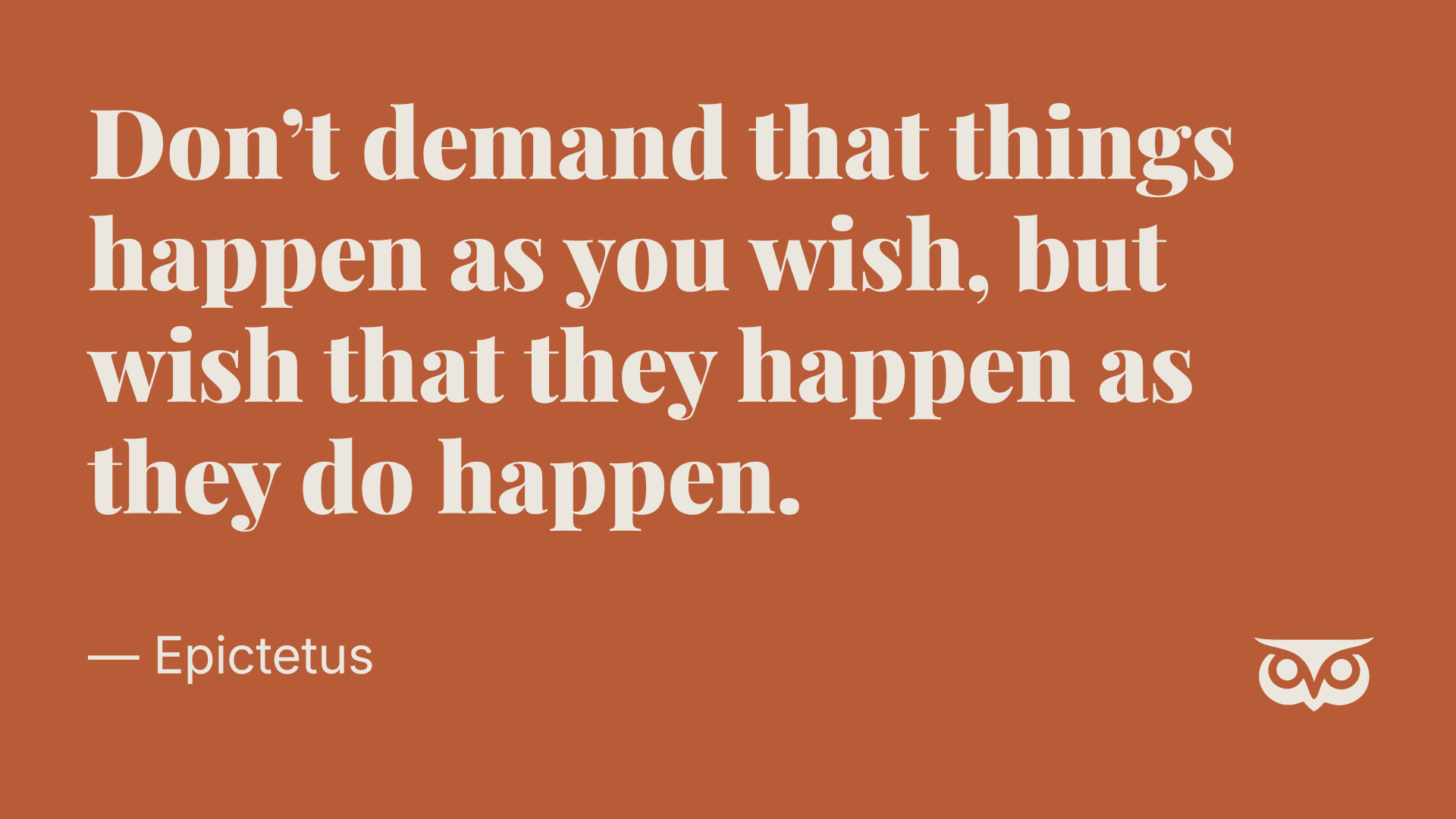
When it comes to treating chronic pain, anxiety, or depression, most people don't struggle because they are unwilling to try and get better.
In fact, the opposite is more often true: they try constantly. They meditate, they do breath-work, they stretch, they journal, and attend various therapies. They challenge their thoughts. They go for walks. They read the books. They do the exercises.
And the entire time, they are demanding that their symptoms relent, scanning for the results as they go.
Is it working? Do I feel calmer? Is the pain less?
Why do I still feel this way?!?
That checking impulse is one of the most common reasons good tools stop feeling effective. It shows up across anxiety, chronic pain, and depression, and it sounds slightly different in each, but it runs on the same platform. When every practice becomes a test, the nervous system receives the same message underneath all of it: this feeling is a problem, and we need to make it go away. The skill that changes this is unattached practice: the ability to do the helpful thing without demanding that it produce an immediate result.
The Paradox of Expectation
This has been, hands down, the hardest thing for me to actually practice. Consider the paradox: if I didn't want something to change, then I probably wouldn't be working on it. Yet the more I wish the symptom to be gone, the more it seems to dig its heels in and hang on. Or, as they say, what you resist persists.
I have experienced this phenomenon with chronic pain, anxiety, depression, and insomnia. The more I fight against something I want to be rid of, the more my brain assumes it is an enemy. Enemies are dangerous, and danger produces fear. Fear intensifies the very symptoms I am fighting against. This is the paradox of Unattached Practice: engaging in a set of actions while letting go of the outcomes you obviously wanted when starting.
Where Unattached Practice Can Help
In anxiety, it may come up as symptom surveillance. You finish a breathing exercise and immediately scan your body to see if the tightness went away. You meditate and then evaluate whether you feel calm enough. Somatic tracking becomes another way to monitor the alarm. Psychologist Paul Salkovskis identified this pattern in 1991 and called it "safety-seeking behavior" [1]. His research showed that these behaviors, things like body-checking, reassurance-seeking, and constant self-monitoring, reduce anxiety in the short term but maintain it over time. They work just well enough to keep you from ever learning that the feared outcome was never going to happen in the first place.
In chronic pain, this looks like intense surveillance and outcome testing. You do your physical therapy exercises and then prod the sore spot to see if it helped. You engage in somatic tracking with hawk-like intensity, rating your pain on a mental scale in real time. You wake up and, before your feet even hit the floor, you're already running a body scan to see if today is a good pain day or a bad one (this was my go-to for years).
Vlaeyen and Linton's fear-avoidance model, one of the most widely cited frameworks in pain science, describes exactly how this happens: when pain is interpreted as threatening, fear evolves into hypervigilance toward bodily sensations, which leads to disability, disuse, and depression [2]. The monitoring itself keeps the pain cycle running because the brain never gets the chance to learn that the sensation is safe.
In depression, it may surface in actions like mood auditing. You force yourself to go for a walk and then ask yourself whether you feel any better. You show up to dinner with friends and spend the whole evening measuring whether you are enjoying it. You do the thing your therapist suggested and then immediately weigh yourself on an invisible emotional scale. When the number doesn't move, you conclude that nothing works, and you resign to the conclusion that you just have an incurable brain chemistry imbalance.
Insomnia is the one on this list I know on a first-name basis. It's frequently anxiety's nighttime cousin, but it plays out differently enough to deserve its own example: effort itself becomes the obstacle. As you run through your wind-down routine, you might notice that the whole time, part of you is standing guard. Checking whether you're getting drowsy yet, or whether tonight is going to be one of the good nights or one of the bad ones. The harder you try to make yourself fall asleep, the more awake you become, because trying is itself a wakeful act. Anyone who has ever been told not to think about something knows the feeling, the instruction itself is what keeps the thing in view (don't think about a purple elephant!). Sleep works the same way. The moment falling asleep becomes a task you're actively working on, you've made yourself too alert to actually do it.
Four different symptoms. The same pattern underneath: using tools with an immediate need for proof that it helped.
An Idea That Is 2,500 Years Old
Buddhist psychology has a word for the engine underneath all of this: samudaya. It is the Second Noble Truth, and it translates roughly to "craving" or "thirst" [3]. The idea is simple: suffering does not come from pain itself. It comes from the constant demand that the present moment be different than it actually is. Every time you engage in a practice all the while asking "is it working?" you are expressing that demand. You are telling your nervous system that right now is still wrong.
In Pain Reprocessing Therapy, this concept is called outcome independence: the ability to observe a sensation without needing it to change in order to feel safe. A 2022 randomized controlled trial published in JAMA Psychiatry found that PRT helped 66% of chronic back pain patients become pain-free or nearly pain-free [4], and a five-year follow-up found that most of those patients maintained their results [5]. PRT works by teaching people to reappraise pain signals as non-dangerous. But that reappraisal only holds when the patient stops incessantly checking whether the pain has changed yet. The moment you start intensely monitoring for improvement, you are sending the brain a new danger signal.
Modern research on mindfulness has arrived at the same conclusion from a different direction. A 2022 meta-analysis published in Clinical Psychology Review examined 41 studies with over 24,000 participants and found that nonattachment, defined as a flexible way of relating to experience without clinging to or suppressing it, was the key mechanism linking mindfulness to reduced anxiety, depression, and psychological distress [6]. It was not the meditation itself that predicted improvement, but the willingness to let go of the outcome.
We like the phrase Unattached Practice because it says the same thing in plain language:
Practice without keeping score.
Doing something for the sake of the doing.
Engaging in the helpful behavior and then letting it be what it is.
Sitting in the journey without becoming fixated on the destination.
3 Steps to Letting the Doing Be Enough
Next time you use any tool, watch for the checking impulse. It might hit while you're still doing the practice, or the moment you finish. Either way, try this sequence.
First, notice any compulsion to change this moment. Whatever your practice happens to be, see if you can engage in it with a light touch. When you feel the pull to fight what is or a rise in intensity, breathe into it while softening your mind and your body. Imagine lying back in a grassy field and watching the clouds pass overhead. Perhaps you are curious as to which ones look like animals as you watch them float by and shift, without any wish to turn them into flying monkeys or anything else in particular. You are just noticing.
Second, name the practice as complete. Say to yourself, silently or out loud: "I breathed. That was the practice." Or: "I did my expressive journaling. That was the practice." Or: "I showed up. That was the practice." Whatever you just did, name it as finished. The doing was the point. There's no need to take an inventory of results. The journey was your destination.
Third, return to the next ordinary thing. Answer the email. Walk into the room. Make breakfast. Continue the conversation. Chop wood, carry water. Move your attention to the next small, concrete action in front of you. The feeling is still there. You're simply not turning this moment into a verdict on whether it's gone yet.
That is the whole sequence. Soften and watch, name it as complete, return to the next thing.
The shift feels small because it is. But it teaches the nervous system something new: that a sensation can be present without becoming the center of the universe. That discomfort can exist without requiring an emergency response. That you can keep living your life without first receiving permission from your own body.
Over time, that message rewires the alarm. The brain learns that pain, anxiety, and low mood can show up, and you can still move forward.
Outcome independence. Nonattachment. Nirodha.
Different traditions, different vocabularies, same insight: relief rarely begins with intensely wishing for the current conditions to disappear. It usually begins the moment you stop fighting them.
Why do coping tools like meditation or breathing exercises stop working?
What is unattached practice?
What is outcome independence in Pain Reprocessing Therapy?
What is nonattachment, and how does it relate to anxiety and depression?
What is safety-seeking behavior?
How can I stop checking for results after using a coping tool?
References
[1] Salkovskis, P. M. (1991). The importance of behaviour in the maintenance of anxiety and panic: A cognitive account. Behavioural Psychotherapy, 19(1), 6-19. https://doi.org/10.1017/S0141347300011472
[2] Vlaeyen, J. W. S., & Linton, S. J. (2000). Fear-avoidance and its consequences in chronic musculoskeletal pain: A state of the art. Pain, 85(3), 317-332. https://doi.org/10.1016/S0304-3959(99)00242-0
[3] The Four Noble Truths. School of the Tibetan Laity. https://www.stl.org.uk/the-four-noble-truths/
[4] Ashar, Y. K., Gordon, A., Schubiner, H., Uipi, C., Knight, K., Anderson, Z., ... & Wager, T. D. (2022). Effect of Pain Reprocessing Therapy vs placebo and usual care for patients with chronic back pain: A randomized clinical trial. JAMA Psychiatry, 79(1), 13-23. https://doi.org/10.1001/jamapsychiatry.2021.2669
[5] Ashar, Y. K., Low, E. L., Knight, K., Schubiner, H., Gordon, A., LeRoux, A., Lumley, M. A., & Wager, T. D. (2025). Pain Reprocessing Therapy vs placebo and usual care for patients with chronic back pain: 5-year follow-up of a randomized clinical trial. JAMA Psychiatry, 82(10), 1049-1051. https://doi.org/10.1001/jamapsychiatry.2025.1844
[6] Ho, C. Y. Y., Yu, B. C. L., & Mak, W. W. S. (2022). Nonattachment mediates the associations between mindfulness, well-being, and psychological distress: A meta-analytic structural equation modeling approach. Clinical Psychology Review, 95, 102175. https://doi.org/10.1016/j.cpr.2022.102175
Beyond the insight.
Knowledge is the first step; integration is the work. If you're ready to move these concepts into your actual life, let's talk about a strategic path forward.
Book a Consultation