

The Miswanting Trap: The Truth About Arrival Fallacy
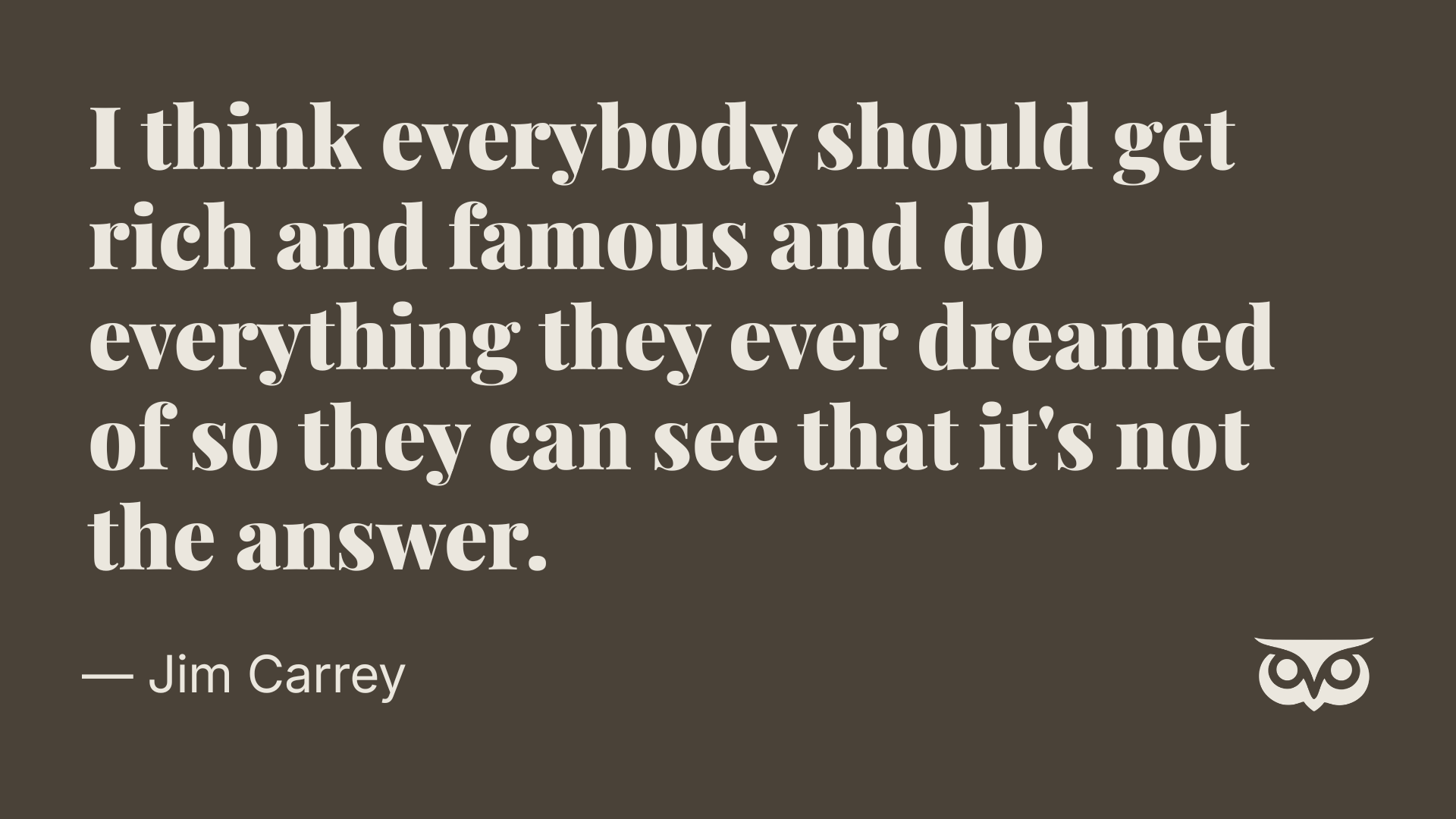
When I was in high school and playing on the school soccer team, running three clubs, taking five AP classes and breaking down in tears every night because of the stress and exhaustion, I knew it would all be worth it when I got a full-ride scholarship to college. Except that turned out not to be true after all.
But I knew in my heart that once I finished both majors in three years, got my goal score on the LSAT, and received my offer of admission from my dream law school that then I would feel absolutely incredible. It turned out I was wrong about that one as well.
Undeterred, I next set my sights on graduating at the top of my class and landing a job at a prestigious law firm. Unfortunately, that also failed to lead to any sort of lasting happiness. Somewhere around that time I remember sitting in my apartment that overlooked the beach (that I also had just known would make me happy) surrounded by all the things I'd bought, painfully aware that I seemingly had no idea at all what would make me happy.
There's a word for what I just described, and once you know it, you'll start seeing it everywhere. Psychologists Daniel Gilbert and Timothy Wilson call it miswanting.[1] It's the very human habit of wanting things that, once we get them, don't deliver the relief we predicted. Psychologist Tal Ben-Shahar has a name for the specific version of this that high achievers know best: the arrival fallacy[2], the belief that reaching a particular goal will finally make us feel finished. Predicting our own future feelings, whether it's about a vacation or a promotion, turns out to be a much harder skill than any of us were ever taught.
If you're the kind of person who has spent your life setting the bar high, clearing it, and immediately setting it higher, this research might explain more about your inner life than a decade of "just relax and enjoy the ride" advice ever did.
The Forecast That Never Quite Comes True
Research has found that people are surprisingly bad at predicting how a future event will actually feel. We tend to overestimate both the intensity and the duration of our emotional reactions, to the good stuff and the bad stuff alike. Get the promotion, and we predict a happiness that will last. For those of us who are wired for overcontrol, we're back to baseline days or even hours later, already eyeing the next title. Miss the promotion, and we predict a devastation that will last; surprisingly, we're also back to baseline quite quickly, more resilient than we gave ourselves credit for.
I would imagine many of us have experienced some version of the following:
You study and prepare for months for an important exam and picture yourself getting the results, feeling pure relief and triumph. Instead you feel oddly flat, maybe already worrying about the next hurdle.
You picture two weeks of pure unwinding on your dream vacation. The actual trip involves lost luggage, a work email you can't ignore, and a version of "relaxed" that took four days to arrive, if it did at all.
You picture your wedding day as "best day of my life." What you actually experience is a blur of logistics, a stray moment of joy during the vows, and exhaustion.
The Treadmill Nobody Warned You About
Here's the part that makes miswanting especially sticky for high-achievers: even when we do get exactly what we predicted, satisfaction has a shockingly short shelf life. Psychologists call this hedonic adaptation.[3] It's the well-documented tendency to return to an emotional baseline no matter how good, or bad, an event was. The new job, the finished degree, the dream house all deliver a thrill that's real and temporary, because our internal reference point quietly resets to match our new normal.
The tricky part is what most of us do next: we assume the fading is happening because we haven't achieved enough yet, rather than recognizing it as a completely normal feature of how brains work. So we raise the bar again. And again. Each time convinced that this next achievement is the one that will finally let us exhale.
Gap-Thinking vs. Gain-Thinking
There's a useful distinction here, one that entrepreneur coach Dan Sullivan and psychologist Dr. Benjamin Hardy popularized in their book The Gap and the Gain[4], between two ways of measuring your life. Gap-thinking measures you against an idealized future self, how far you still have to go. Gain-thinking measures you against your past self, how far you've already come. Gap-thinking is the engine behind the goalpost-moving. It's forward-facing by design, which means it can never register "enough." There is always another gap.
If you've built an identity around high standards, gap-thinking probably feels less like a bias and more like a fact. That's worth questioning. High standards and self-punishing standards are not the same thing, even though they can look identical from the outside.
Why "Enough" Can Feel Unsafe
This is the piece I think gets missed most often. Arriving doesn't just feel less good than expected; for a lot of high-achieving, overcontrolled (OC) people, arriving doesn't feel safe. If your nervous system learned early on that being valued was conditional on performing, producing, or achieving, then unstructured stillness, the feeling of being done, of having nothing left to prove, is unfamiliar territory. It doesn't feel restful. It feels foreign, and the nervous system tends to code anything unfamiliar as risk. So instead of settling into "I did it," the mind quietly generates the next problem to solve. Contentment hasn't had much chance to become a practiced, trusted state, which is different from being incapable of it.
What Actually Helps
None of this is a case against ambition, or for aiming lower. The finish line, the belief that some specific achievement will finally produce lasting relief, is the part worth examining. A few places to start:
Change your management style. Picture the way a good manager treats a high performer. They name the win specifically, then talk about what's next, in that order. Most of us skip straight to the second half. The next time you finish something worth noting, say out loud or write down one specific sentence about what you did well, in the same tone you'd use with someone you respect, before you let your mind move on. If you can't think of what to say, borrow the words you'd use for a direct report who did the same thing.
Practice gain-thinking on purpose. Once a week, set a timer for five minutes and write down three things you can do now that you couldn't do a year ago. A skill, a harder conversation you can finally have, a version of a task that used to take you twice as long. This creates a more sustainable source of motivation without lowering the bar, because you're building a second reference point your mind can reach for besides the gap.
Treat "done" as a skill you build through deliberate repetition, and build it at two different scales. For small finishes, closing a project, sending the deliverable, take sixty seconds where you stop typing, put your hands flat on the desk, and notice what you just did in plain terms before your attention moves anywhere else. For bigger milestones, a launch, a promotion, a diploma, decide in advance what marking it will look like, a dinner, a day off, a call to someone who mattered along the way, and put it on the calendar before the milestone hits. A promise made ahead of time survives a busy week better than one you're hoping you'll feel like keeping once the moment actually arrives.
Separate the standard from the story. When you fall short of the bar you've set, you can keep the bar and still catch the story trying to attach itself to it. Try this: the next time you miss a target, write down the sentence your mind immediately reaches for, then write the sentence you'd say to a colleague who told you the exact same thing happened to them. Say the second sentence to yourself instead. This keeps the standard intact. Self-compassion research[5] shows that people who talk to themselves the way they'd talk to someone they respect tend to recover faster and try again sooner than people who treat every miss as evidence of a character flaw.
Miswanting is what happens when a very reasonable prediction system runs into a moving target. The goalposts will keep drifting unless you notice you're the one moving them, and start asking what you actually need instead of what you've been trained to chase.
Why doesn't achieving my goals make me happy?
What is miswanting?
What is arrival fallacy?
What is hedonic adaptation?
What is the difference between gap thinking and gain thinking?
How can I feel more satisfied with what I have already accomplished?
References
[1] Gilbert, D. T., & Wilson, T. D. (2000). Miswanting: Some problems in the forecasting of future affective states. In J. P. Forgas (Ed.), Thinking and Feeling: The Role of Affect in Social Cognition (pp. 178-197). Cambridge University Press.
[2] Ben-Shahar, T. (2007). Happier: Learn the Secrets to Daily Joy and Lasting Fulfillment. McGraw-Hill.
[3] Brickman, P., & Campbell, D. T. (1971). Hedonic relativism and planning the good society. In M. H. Appley (Ed.), Adaptation-Level Theory (pp. 287-302). Academic Press.
[4] Sullivan, D., & Hardy, B. (2021). The Gap and the Gain: The High Achievers' Guide to Happiness, Confidence, and Success. Hay House Business.
[5] Neff, K. D. (2003). Self-compassion: An alternative conceptualization of a healthy attitude toward oneself. Self and Identity, 2(2), 85-101.
Beyond the insight.
Knowledge is the first step; integration is the work. If you're ready to move these concepts into your actual life, let's talk about a strategic path forward.
Book a Consultation