
7 Concepts Western Psychology Still Hasn't Named
You May Have Felt This. Japanese Language Has a Word for It.
Western psychology is extraordinarily good at naming what is wrong.
Anxiety.
Burnout.
Avoidant attachment.
Cognitive distortion.
The clinical vocabulary is precise, well-researched, and useful. But it is almost entirely built around dysfunction. It names the wound, not the way through.
Japanese culture takes a different approach. For centuries, it built a vocabulary for how to live well, not just for what to fix. Many of those words have no English equivalent, which means most high performers have spent their careers chasing states they could not even name.
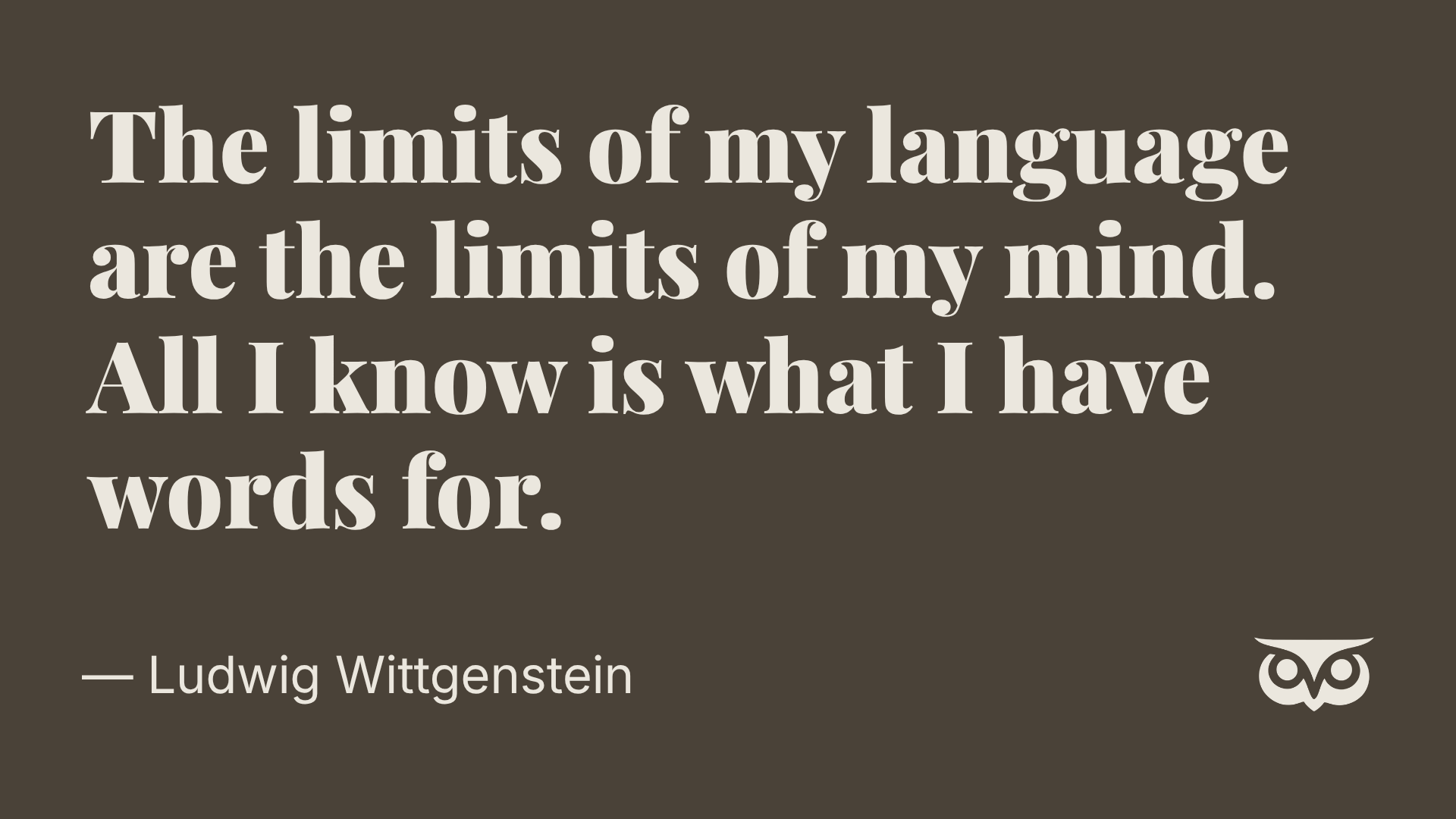
This is not a small problem. Research in linguistic psychology has shown that having a word for an experience makes it significantly easier to identify, regulate, pursue, and repeat. When a concept has no name, it stays a vague feeling, something you vaguely circle around but never quite land on.
The seven words below aren’t exotic philosophy. These are precise descriptions of things you have likely already experienced, or quietly wanted, without the language to say so.
Seven Words Worth Learning
1. Ikigai (ee-kee-guy): your reason for getting up.
Literally, "life worth." Not your job title. Not your output. The thing that makes the morning feel like it has a direction. Research links a strong sense of ikigai to lower rates of anxiety, better immune function, and longer life. Most high performers have optimized everything except this.
Try this: Write down three things you would do even if you were never paid for them and no one was watching. That overlap is worth examining.
2. Kaizen (kai-zen): small improvements, compounded.
The Japanese philosophy of continuous, incremental improvement, not a dramatic overhaul or a new system. Think one small thing, done consistently, over time, which is the key to all personal change. For people who default to all-or-nothing thinking, kaizen is the direct antidote. Progress does not require a revolution. It requires a direction and a small next step.
Try this: Pick one area of your life that feels stuck. Identify the smallest possible improvement you could make today. Notice the mind’s tendency to want to pick multiple things that you need to “fix.” Pick the smallest possible one instead.
3. Kintsugi (kin-tsoo-gee): the art of repairing with gold.
When a piece of pottery breaks, kintsugi is the practice of repairing it with gold lacquer, making the fracture lines visible rather than hiding them. The philosophy: what has been broken and repaired is more interesting, more honest, and often more beautiful than what has never been tested. The high performers we work with often spend enormous energy concealing the cracks. Kintsugi suggests that is exactly backwards.
Try this: Identify one experience you have been framing as a failure. Write one sentence about what it made possible that would not have happened otherwise.
4. Shoshin (sho-shin): beginner's mind.
The Zen concept of approaching even familiar things with openness and curiosity, as if encountering them for the first time. The Zen teacher Shunryu Suzuki wrote that in the beginner's mind there are many possibilities, and in the expert's mind there are few. Overcontrolled, high-functioning people tend toward cognitive rigidity, the quiet closing off of new input. Shoshin is the practice of keeping the aperture open.
Try this: In your next meeting or conversation, spend the first five minutes operating as if you know nothing about the person or topic. Notice what you hear differently.
5. Shikata ga nai (shi-ka-ta ga nai): it cannot be helped.
This is not resignation, nor is it giving up. This is a practiced acceptance of what genuinely lies outside your control, followed by a reorientation toward what does not. For people who default to overcontrol, the inability to release an outcome is not a character strength. It is a significant drain on cognitive and emotional resources. Shikata ga nai names the moment of deliberate surrender into what is, knowing that it’s all impermanent.
Try this: Write down one thing you are currently spending energy on that you cannot change. Then write: "This is outside my control. Where does my energy belong instead?"
6. Ma (mah): meaningful interval.
The Japanese concept of negative space, the pause between notes that makes music, the silence between words that makes conversation. Ma is not emptiness. It is intentional, shaped space. In a culture that treats stillness as lost productivity, ma offers a different framing: the pause is not the absence of something. It is part of the structure. Rest is not recovery from the real work. It is part of how the real work becomes possible.
Try this: Build one ten-minute interval of genuine stillness into your day this week. No phone, no input, no agenda. Notice what the discomfort tells you.
7. Zanshin (zan-shin): remaining mind.
In Japanese martial arts, zanshin describes the state of relaxed alertness that follows a completed action. Full presence maintained, attention sustained, not drifting into what is next. For high performers who are perpetually in planning mode, the present moment is often a waiting room for the next thing. Zanshin is the practice of staying in the room you are actually in.
Try this: At the end of your next conversation, before reaching for your phone or moving to the next task, pause for thirty seconds and let the exchange land. Do not evaluate it. Just let it finish.
None of these require a sabbatical to Japan, a retreat, or a significant life change. They require only a certain quality of attention to the life you are already living.
The feelings were always there. Now you have the words.
What Japanese concepts are most useful for high performers and executives?
Why does having a word for something matter psychologically?
What is ikigai and how is it different from finding your purpose?
What does kintsugi mean and how does it apply to personal growth?
What is the difference between shikata ga nai and giving up?
How does this connect to the work of The Wise Mind Group?
Beyond the insight.
Knowledge is the first step; integration is the work. If you're ready to move these concepts into your actual life, let's talk about a strategic path forward.
Book a Consultation