

Courage is a Muscle
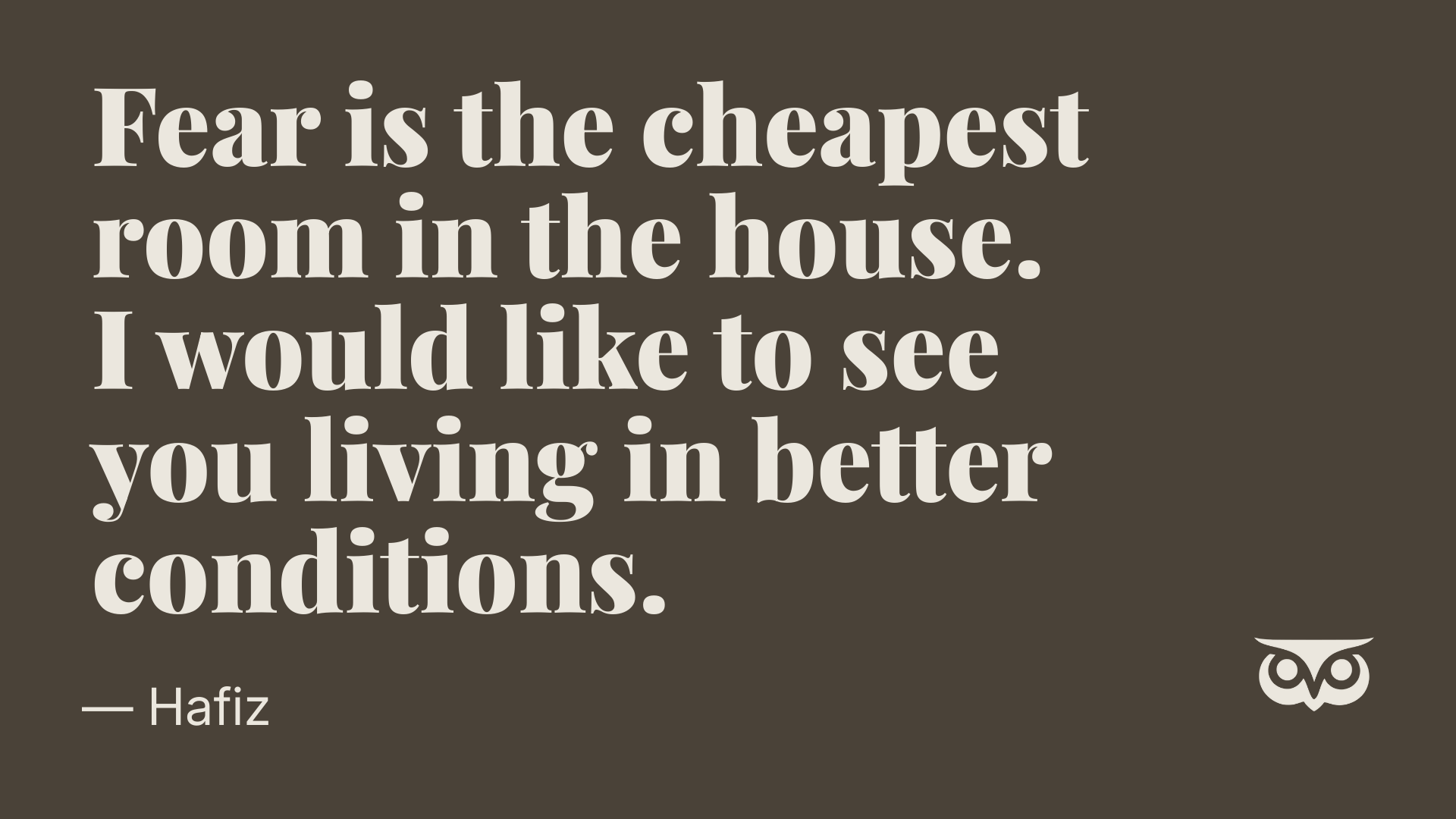
Why Your Brain Treats a Difficult Conversation Like a Tiger Attack
Your brain can't tell the difference between a physical threat and a social one.
That boardroom presentation that makes your heart race? Your impending difficult conversation with your partner? The email you're avoiding sending?
Your nervous system processes all of these the same way it would process a predator in the wild.
This made perfect sense 10,000 years ago.
Fear kept us alive. It helped us remember which berries were poisonous, where the tigers lived, and which caves to avoid. The cost of getting it wrong was death, so our brains evolved to be hypervigilant; to overestimate threats rather than underestimate them.
It makes a lot less sense now.
Most of us aren't facing direct physical threats on a daily basis. But the brain still uses the same ancient pathways to process modern fears: rejection, failure, vulnerability, judgment.
So when you're about to ask for help, admit you don't know something, or apologize for a mistake, your body responds as if you're in actual danger.
No wonder high achievers develop chronic pain and burnout. You've been living in a state of low-grade threat for years.
The Only Way Out Is Through (Gently)
You can't think your way out of fear. You have to act your way out.
This is where exposure comes in. But not the white-knuckle, "just push through it" version you might be imagining.
Exposure therapy works by rewiring the memory that incorrectly tagged something as a threat.
The goal isn't to eliminate fear. It's to teach your brain that the thing you're afraid of won't actually kill you.
Here's the critical part most people miss: You have to be kind to yourself during the process.
If you force yourself into a feared situation without self-soothing, without acknowledging what you're feeling, you can actually strengthen the fear response. Your brain says, "See? That was terrible. Let's never do that again."
But if you soothe yourself, if you name the fear out loud ("I'm scared they'll say no," "I'm afraid I'll look stupid"), you give your brain the chance to store the memory in a new, less threatening way.
Courage Is a Muscle, Not a Personality Trait
You don't become braver by waiting to feel brave.
You become braver by doing small things that scare you, over and over again, until your nervous system learns that vulnerability doesn't equal death.
This doesn't mean bungee jumping or extreme sports (unless that's your thing).
It means doing the small, everyday things that terrify high-functioning, over-controlled people:
Asking for help when you don't have it all figured out
Admitting you don't know the answer in a meeting
Apologizing without over-explaining or defending yourself
Sending the email you've been rewriting for three days
Having the conversation you've been avoiding
Doing something where rejection is possible
Every time you do one of these things and survive it, you're retraining your brain.
The Man Who Cured His Fear of Rejection
There's a story from the podcast Invisibilia about a man whose marriage ended, leaving him in a dark place fueled entirely by the fear of rejection.
He decided to expose himself to rejection repeatedly to liberate himself from it.
He created a deck of "rejection cards"—tasks designed to guarantee a "no." Things like asking strangers for a ride, requesting absurd favors, putting himself in situations where the answer would almost certainly be rejection.
And he did it over and over again.
Not because he enjoyed it. But because each "no" proved that rejection wouldn't destroy him.
By the end, he'd built the kind of courage that most people spend their entire lives avoiding.
What This Looks Like in Practice
You don't need a deck of rejection cards (though you could).
You just need to find small ways every day to change your relationship with fear.
Feel the physical sensations (the racing heart, the sweaty palms, the tightness in your chest) without shutting down.
Instead of listening to what fear says ("Don't do this, you'll get hurt"), open up to the experience. Let your brain see that you can survive discomfort.
This is how you retrain the system.
Not by avoiding fear. Not by white-knuckling through it. But by moving toward it gently, repeatedly, with self-compassion.
If You're Ready to Rebuild Your Relationship with Fear
This kind of work, rewiring fear responses, building tolerance for uncertainty, and learning to be kind to yourself in the process, is central to what we do in therapy.
Especially for clients who've spent years in fight-or-flight, whose perfectionism and control have become the very things creating chronic pain, burnout, and emotional rigidity.
FAQ
Why does a social situation trigger a physical stress response?
How does exposure therapy rewire the brain's fear response?
Who is most likely to experience chronic pain or burnout from this response?
What is the difference between "white-knuckling" and gentle exposure?
What are some everyday examples of practicing courage?
How does professional therapy assist in retraining the nervous system?
Beyond the insight.
Knowledge is the first step; integration is the work. If you're ready to move these concepts into your actual life, let's talk about a strategic path forward.
Book a Consultation