

"That's Interesting": What a Seventh Grader Taught Me About Pain
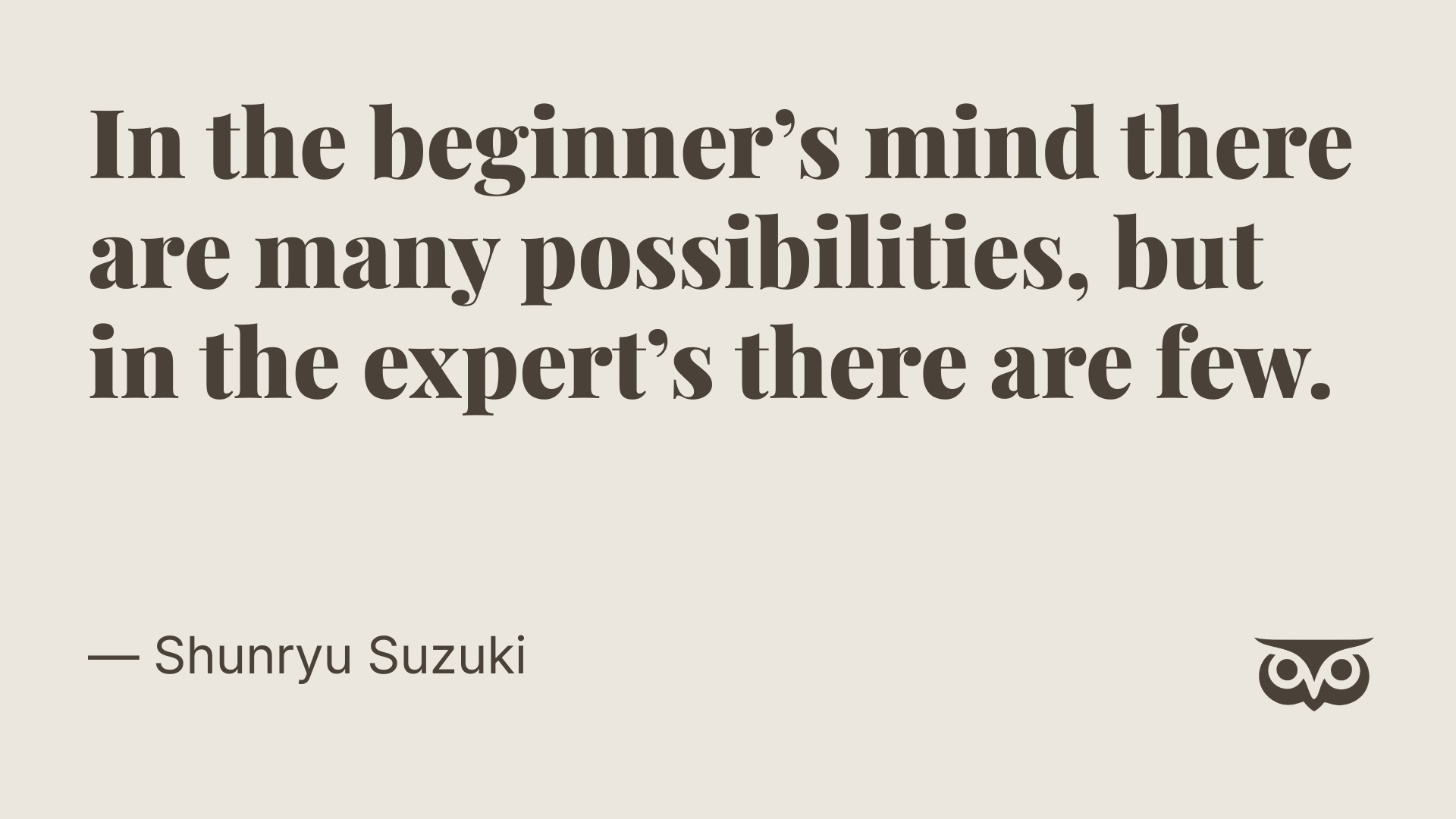
The other day I was picking my kids up from school when my six-year-old daughter spotted a bug on the sidewalk. "Yuck!" she shrieked, jumping back like it had personally offended her.
My 12-year-old didn't miss a beat. "In science," he informed her, with all the gravity of someone who has recently absorbed a rule from a teacher he likes, "instead of saying 'yuck' or 'ew,' we say, 'That's interesting!'"
I laughed, and then I thought about it for the rest of the drive home. My son had just summarized, in one sentence, a shift I've been practicing myself for many years and spend many of my working hours helping my clients make.
The Verdict Arrives Before You Do
Every moment, your brain and nervous system are taking in an enormous stream of input: sounds, sensations, facial expressions, the temperature of the room, the twinge in your lower back. Long before you've formed a conscious thought about any of it, your brain has already stamped each piece with a feeling tone: good, bad, or neutral. Approach, avoid, or ignore. Our survival historically depended on how rapidly our ancestors made these assessments, with a bias toward assessing things as "yuck." Imagine one of your ancestors walking on the savannah one hundred thousand years ago and hearing the bushes rustle. There are two mistakes she could make: one is thinking the rustle was a tiger when it was actually the wind, the other is thinking it was the wind when it was actually a tiger. Our ancestors who survived were the ones with nervous systems that tended to make the first mistake.
My daughter didn't decide the bug was disgusting. The "yuck" arrived on its own, faster than thought. And that's true for all of us.
These verdicts are not weighed equally, either. Rick Hanson describes the brain as Velcro for negative experiences and Teflon for positive and neutral ones. The pleasant moment slides right off. The unpleasant one sticks, and then we replay it, analyze it, and brace against the next one.
From an evolutionary perspective this makes perfect sense. The ancestor who lingered to admire the rustling in the grass didn't always get to become anyone's ancestor. Noticing the bad fast, and pushing it away hard, kept our species alive.
The trouble is that pain, discomfort, and uncertainty aren't occasional intrusions into an otherwise pleasant life. They're unavoidable aspects of our existence. When our default response to every unpleasant experience is to judge it and shove it away, we add a second layer of suffering on top of the first: the fight against what is already here.
How Fast Is "Faster Than Thought"?
It's so much faster than you might imagine. Deep in your brain sits the amygdala, a small, almond-shaped cluster of neurons that works something like a smoke detector for danger. Remarkably, in recent years researchers have been able to record its activity directly, using electrodes that were already placed in patients' brains as part of their epilepsy treatment.
In one study published in Nature Neuroscience, the amygdala began responding to a frightened face in about 74 milliseconds [1]. That's four to five times faster than the actual blink of an eye. The amygdala reacted before the visual part of the brain had even finished assembling a clear picture of the face. In other words, your alarm system can cast its vote before the part of you that actually sees what's in front of you has weighed in.
A later study took this a step further. Researchers flashed frightened faces so quickly that people couldn't consciously see them at all, and the amygdala still reacted in under a tenth of a second [2]. The alarm went off even though the person had no idea there was anything to be alarmed about.
Here's the catch, and it's an important one. That early signal is fast precisely because it's crude. The amygdala isn't working from a crisp, detailed image. It's working from something closer to a blurry sketch. It's built for speed over accuracy, which is exactly why so many of its "yucks" turn out to be a harmless bug, a rustling bush, or a twinge in your back that isn't dangerous at all.
And for some of us, the alarm is even more sensitive. Studies of people with high anxiety find that their brains latch onto threatening faces more readily, and in some studies more quickly, than the brains of people with lower anxiety, sometimes even when the threat is shown too fast to register consciously.
Why "Yuck" Keeps Pain Going
Here is where it gets personal for anyone living with neuroplastic pain or other persistent symptoms.
Pain, at its root, is a danger signal. The brain generates it when it concludes that some part of the body needs protecting. When a sensation shows up and we meet it with "yuck" (dread, bracing, frustration, figuring it out, or urgent attempts to make it stop), we're sending the brain a very clear message: this sensation is dangerous. The brain takes that as confirming data and turns the alarm up. More fear, more pain, more fear. It's the loop that keeps so many of my clients stuck, sometimes for years.
In Pain Reprocessing Therapy, one of the core tools is somatic tracking: paying attention to a sensation with curiosity and a sense of safety rather than fear. It sends the brain a different message: safety instead of alarm. The profound shift from "yuck" to "that's interesting" tells your nervous system: we can look at this. We're safe enough to be curious.
The Question That Opens the Door
Self-inquiry is core to the RO-DBT framework we teach our clients. Rather than rushing to explain, fix, or defend against something uncomfortable, we turn toward it with a question:
What can I learn from this?
What I love about this question is what it doesn't ask. It doesn't ask you to like the experience, to reframe it as secretly wonderful, or to come up with an answer at all. In RO-DBT we actually encourage people to be suspicious of answers that arrive too quickly, and to hold the question for a while. The quick answer is usually the old, well-rehearsed pathway talking. The value is in the asking itself, which moves you out of verdict mode and into inquiry. Holding that question is how we begin to shift from the default yuck that fuels the fear-pain cycle to the that's interesting that begins to break it.
When Vigilance Feels Like Safety
For people with an overcontrolled biotemperament, this shift can feel almost impossible at first. Overcontrolled nervous systems run high on threat sensitivity and comparatively low on reward sensitivity. That means the "yuck" lands harder and the pleasant moments slide off even faster. Add a lifelong habit of managing discomfort through control and correction that has been reinforced, and aversion starts to feel like competence. Of course I should do something to get rid of this feeling. Of course something that feels bad needs to be fixed or solved.
There's some fascinating research that hints at why. Overcontrolled temperament has a lot in common with what researchers call "behaviorally inhibited" temperament: the cautious, watchful toddlers who hang back and study a new person or situation before approaching. In a well-known study published in Science, researchers scanned the brains of adults who had been identified as either inhibited or uninhibited around age two. Two decades later, the adults who had been inhibited toddlers still showed a stronger amygdala response to unfamiliar faces [3].
A later study added a twist I find even more telling. In people with an inhibited temperament, the amygdala kept reacting to faces they had already seen as if those faces were still brand new [4]. For most people, the alarm quiets down once something becomes familiar. For a temperamentally cautious nervous system, it may keep ringing long after the danger has been ruled out.
No one has run these studies on overcontrolled temperament specifically, so this is an educated inference rather than settled fact. But it matches a pattern I see constantly in my work: the alarm doesn't just go off easily, it's slow to believe that the all-clear is real. It takes patience and consistency to rewire these deeply worn neural pathways, but it is so possible and so worth it.
Curiosity can feel risky, even irresponsible, to a nervous system that has equated vigilance with safety. But this is exactly why it's so powerful. Every time you meet discomfort with inquiry instead of judgment, you give that hard-working system a small piece of evidence that it can ease up.
A Practice for Getting Curious
If you'd like to try this yourself, start small. Pick something mildly unpleasant, not your worst pain or your most flooding emotion. Think a car alarm down the street, a tight shoulder, the flicker of irritation when someone replies-all to an email, or the feeling of tiredness after a poor night's sleep. Skills are built on low-stakes reps.
Catch the verdict. Notice the "yuck," "ew," or "ugh, not again" as it arrives. You don't have to argue with it. Just name it: "There's my judging mind." The verdict is so automatic that simply noticing it is already a departure from autopilot.
Ask the question. Silently ask, "What can I learn from this?" Let it be a genuine question rather than a rhetorical one. If nothing comes, no matter. Simply training ourselves to start asking the question is the practice.
Put on your lab coat. Borrow my son's science-class stance and study the experience like an interesting specimen. Where exactly is it? Does it have edges? A temperature? A texture? Is it constant, or does it pulse and shift? Is there an emotion hiding underneath it?
Stay for a few breaths. You're not trying to change or fix anything. If you notice yourself trying to make it disappear, that's just the old aversion habit sneaking back in. Notice that too, with curiosity, and return to observing.
Notice what shifted. Sometimes the sensation softens. Sometimes it doesn't change at all. The outcome is not at all important. Either way, you've given your brain a rep of turning toward instead of away, and those repeated, consistent reps are what build a new pathway.
One more thing to watch for. Many of my overcontrolled clients have trained themselves to be so outcome-focused that they'll try a new practice a few times, notice that nothing has changed, and quietly conclude it doesn't work. If you catch yourself doing this, see if you can get curious about that, too. Imagine going to the gym, doing a handful of sit-ups, and then checking the mirror for a six-pack. You wouldn't be surprised that it hadn't appeared, and you probably wouldn't decide sit-ups were useless. You'd understand that strength builds quietly, through repetition, long before you can see it. Rewiring a nervous system works the same way. Each rep counts, even when it doesn't feel like anything is happening.
Learning This Together
This is one of the practical tools we teach in The Wise Mind Group's skills group for neuroplastic pain and overcontrol. If you're ready to practice turning toward your experience with a little more curiosity, we'd love for you to join us for the next one. Just drop us a note to learn more.
My daughter, for the record, was not entirely convinced, but she did crouch down and take a closer look at that little bug. And I know with practice we can all start getting the tiniest bit more curious about the difficult or unpleasant aspects of our experience.
Why does aversion make chronic pain worse?
How quickly does the brain detect a threat?
What is negativity bias?
What is self-inquiry in RO-DBT?
How is curiosity different from positive thinking?
Is curiosity harder for people with an overcontrolled temperament?
Méndez-Bértolo C, Moratti S, Toledano R, Lopez-Sosa F, Martínez-Álvarez R, Mah YH, Vuilleumier P, Gil-Nagel A, Strange BA. A fast pathway for fear in human amygdala. Nature Neuroscience. 2016;19(8):1041-1049.
Wang Y, Luo L, Chen G, Luan G, Wang X, Wang Q, Fang F. Rapid processing of invisible fearful faces in the human amygdala. Journal of Neuroscience. 2023;43(8):1405-1413.
Schwartz CE, Wright CI, Shin LM, Kagan J, Rauch SL. Inhibited and uninhibited infants "grown up": adult amygdalar response to novelty. Science. 2003;300(5627):1952-1953.
Blackford JU, Allen AH, Cowan RL, Avery SN. Amygdala and hippocampus fail to habituate to faces in individuals with an inhibited temperament. Social Cognitive and Affective Neuroscience. 2013;8(2):143-150.
Beyond the insight.
Knowledge is the first step; integration is the work. If you're ready to move these concepts into your actual life, let's talk about a strategic path forward.
Book a Consultation